
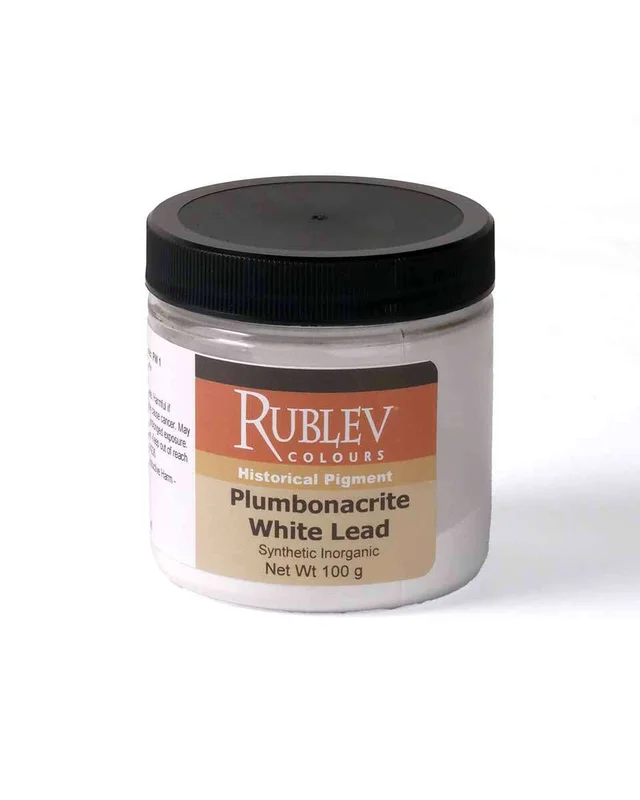
Description
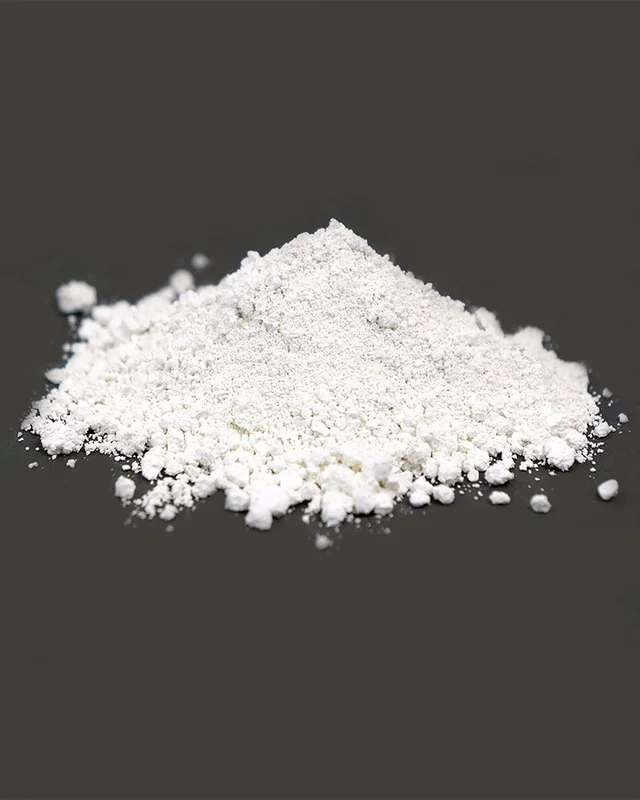
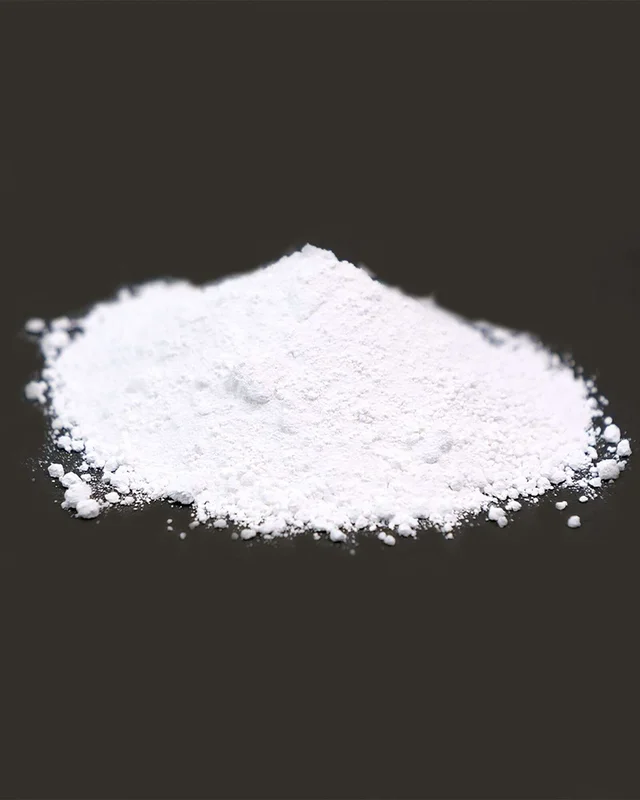
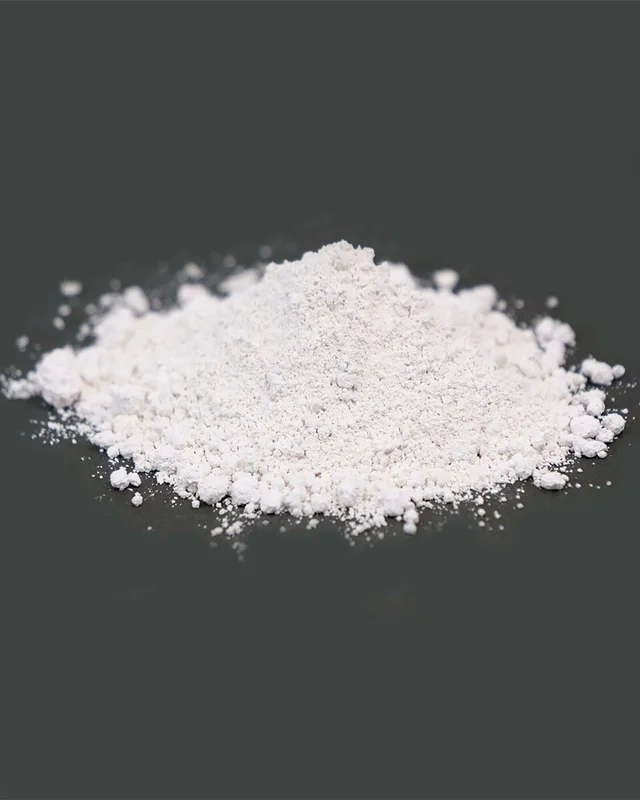
Plumbonacrite Lead White is a basic lead oxycarbonate pigment phase with the formula Pb5(CO3)3O(OH)2. It is compositionally distinct from ordinary basic lead carbonate, or hydrocerussite, which is the principal phase in traditional lead white. Plumbonacrite is a rare natural mineral and can also occur as a synthetic lead white phase. In artists’ materials and conservation literature, it is significant because it may indicate unusual manufacture, alkaline leaded media, limited carbon dioxide during formation, or alteration of lead-rich pigments such as red lead.
Unlike conventional lead white, which usually consists mainly of hydrocerussite with variable cerussite, plumbonacrite is a carbonate-poorer lead oxycarbonate. In the traditional corrosion route for making lead white, it can form as an early intermediate but normally converts to hydrocerussite and then cerussite as carbonation proceeds. Its persistence as a pigment phase is therefore unusual and diagnostically important.
| Pigment Names | |||||||
|---|---|---|---|---|---|---|---|
| Common Names: | Chinese (Simplified): 水铅碳酸盐铅白 English: plumbonacrite lead white, synthetic plumbonacrite, modern lead white French: blanc de plomb plumbonacrite German: plumbonacritisches Bleiweiß Italian: bianco di piombo plumbonacrite Russian: свинцовые белила плюмбонакрита Spanish: blanco de plomo plumbonacrita |
||||||
| Synonyms: | Pentalead tricarbonate dihydroxide oxide, pentalead tricarbonate oxide dihydroxide, lead oxycarbonate, basic lead oxycarbonate, 3PbCO3·Pb(OH)2·PbO, synthetic plumbonacrite, nacreous lead white, pearlescent lead white, modern lead white | ||||||
| Nomenclature: |
|
| Pigment Information | |
|---|---|
| Color: | White |
| Pigment Classification: | Synthetic Inorganic |
| Colour Index: | Pigment White 1 |
| Chemical Name: | Pentalead tricarbonate dihydroxide oxide |
| Chemical Formula: | Pb5(CO3)3O(OH)2 |
| CAS No.: | — |
| Series No.: | 7 |
| ASTM Lightfastness | |
| Acrylic: | Not Listed |
| Oil: | I (based on lead white) |
| Watercolor: | Not Listed |
| Physical Properties | |
| Particle Size (mean): | — |
| Density: | 7.07 g/cm3 observed; 7.13 g/cm3 calculated |
| Hardness: | 2.5–3.0 |
| Refractive Index: | ncalc ≈ 2.04 |
| Oil Absorption: | 12 g oil / 100 g pigment |
| Health and Safety | DANGER! CONTAINS LEAD. HARMFUL IF SWALLOWED. Avoid ingestion and skin contact. Wear protective clothing and gloves to prevent skin contact. Never use near children or pets. Conforms to ASTM D 4236.
DANGER Always protect yourself against the chronic hazards of this and other chemical products by keeping them out of your body. Do this by avoiding ingestion, excessive skin contact, and inhaling spraying mists, sanding dust, and vapors from heating. |
For a detailed explanation of the terms in the table above, please visit the Composition and Permanence page.
Origin and History
Plumbonacrite is a rare basic lead oxycarbonate mineral and a synthetic lead white phase that has been described in the modern literature as a form of “modern lead white” or “synthetic plumbonacrite.” It should not be confused with ordinary basic lead carbonate, the hydrocerussite-rich pigment historically known as lead white. Conventional historical lead white generally consists of hydrocerussite, Pb3(CO3)2(OH)2, often with cerussite, PbCO3. Plumbonacrite has a different composition, Pb5(CO3)3O(OH)2, and belongs to the hydrocerussite-related family of basic lead carbonates.
The name has been used in both mineralogical and conservation literature. In the twentieth century, a new type of lead white was developed and later discussed as “synthetic plumbonacrite.” Some examples were described as nacreous or pearlescent, although not every sample containing synthetic plumbonacrite has that appearance. In conservation science, plumbonacrite is also important as an uncommon phase found in some historical paint systems, where it may indicate special chemical conditions rather than ordinary lead white manufacture.
Source
Plumbonacrite lead white may be produced synthetically under conditions that favor a carbonate-poor basic lead oxycarbonate. Literature on lead corrosion shows that plumbonacrite can form early in the carbonation of lead acetate or lead corrosion products, then convert to hydrocerussite and eventually cerussite as additional carbon dioxide is absorbed. For this reason, plumbonacrite is usually absent from fully developed classical stack-process lead white.
Modern lead white processes using lead, lead oxide, water, acetate or acetic acid, and controlled carbon dioxide admission have been associated with the formation of pentalead tricarbonate dihydroxide oxide. In painting materials, synthetic plumbonacrite should therefore be understood as a distinct lead white phase rather than merely a grade of ordinary basic lead carbonate.
Permanence and Compatibility
Plumbonacrite is unaffected by light in the same general sense as other inorganic lead carbonate whites, but it is chemically less straightforward than ordinary lead white. It is a carbonate-poorer, metastable phase in the lead oxide–carbon dioxide–water system and can transform toward hydrocerussite and cerussite as carbonation proceeds. Its occurrence in paint may therefore preserve evidence of the chemical environment in which it formed.
In oil painting, lead compounds can participate in drying reactions and interact strongly with oil binders. Plumbonacrite has been identified in Rembrandt impasto samples, where its presence was interpreted as evidence for an alkaline leaded medium. It has also been identified as an intermediate phase in the alteration of red lead. These findings indicate that plumbonacrite can be compatible with oil paint systems, but its presence may also mark unusual recipe conditions or alteration pathways.
As with other lead carbonate whites, plumbonacrite should be regarded as sensitive to acids and to sulfur-bearing environments that may produce dark lead sulfide. It should not be used in situations where exposure to acidic conditions, sulfide pollution, or alkaline fresco conditions would be expected to compromise lead-containing pigments.
Why Choose Plumbonacrite Lead White?
Plumbonacrite Lead White is intended for artists, conservators, technical art historians, and researchers who need a lead white pigment phase distinct from ordinary basic lead carbonate. Its value lies not only in its white color, but in its unusual chemistry and its importance in the study of historical paint films, especially lead-rich paint systems and high-bodied oil paint.
For painters interested in historical materials, Plumbonacrite Lead White offers a rare opportunity to explore a lead oxycarbonate phase associated with specialized lead white chemistry. For conservation and materials research, it provides a reference material for studying the distinction between plumbonacrite, hydrocerussite, and cerussite in paint samples.
Applications in Conservation and Historical Reconstruction
Plumbonacrite is important in conservation science because it has been identified in certain historical paint systems where ordinary lead white alone does not fully explain the observed material structure. Its presence may point to alkaline leaded media, unusual pigment preparation, incomplete carbonation, or transformation pathways involving other lead compounds.
In historical reconstruction, Plumbonacrite Lead White may be useful for studying lead white behavior in oil paint, impasto structure, lead compound interactions, and the analytical identification of lead carbonate phases. It is especially relevant where the research question concerns how different lead white phases influence opacity, handling, body, and paint film development.
Plumbonacrite Compared with Other Lead White Phases
| Phase | Formula | Common Role | Notes for Artists and Conservators |
|---|---|---|---|
| Plumbonacrite | Pb5(CO3)3O(OH)2 | Rare lead oxycarbonate phase | Important in technical studies of lead white, alkaline paint systems, and unusual lead-rich impastos. |
| Hydrocerussite | Pb3(CO3)2(OH)2 | Main phase of traditional basic lead carbonate | The principal component of conventional lead white and stack-process lead white. |
| Cerussite | PbCO3 | Neutral lead carbonate | Often present with hydrocerussite in lead white; higher proportions may affect opacity and handling. |
Pigment Characteristics for Artists
As a lead-containing white pigment, Plumbonacrite Lead White should be expected to have a high refractive index, high density, and strong covering potential compared with many non-lead white pigments. Its precise handling in oil will depend on particle size, particle shape, and the specific method of manufacture.
Because published oil absorption and paint handling data for pure plumbonacrite are limited, artists should test it in small batches before using it in important work. It may be most useful where the goal is technical experimentation, historical reconstruction, or comparison with other lead white pigments rather than direct substitution for ordinary lead white without testing.
Related Pigments
For comparison, see related lead pigments such as Lead White, Stack Lead White, Flake White, Cremnitz White, Red Lead, Litharge, Massicot, and Lead-Tin Yellow. Comparing these materials helps clarify how different lead compounds vary in color, chemistry, opacity, drying behavior, and historical use.
Technical References
This productis based on published conservation, mineralogical, and technical studies of lead carbonate pigments, including research on synthetic plumbonacrite, lead white manufacture, lead corrosion, Old Master paint samples, and the identification of plumbonacrite in historical paint systems.
Oil Absorption and Grinding
Reliable oil absorption values for pure plumbonacrite as a single pigment phase were not found in the consulted literature. Because plumbonacrite can occur in different manufactured forms, including fine modern lead white products and nacreous platelet-like particles, its handling properties may depend strongly on particle size, particle shape, and method of manufacture.
When handling the dry pigment, avoid creating dust. Grind only with proper precautions, local ventilation, gloves, and respiratory protection appropriate for lead-containing powders. Do not sand, spray, or heat paint films containing lead pigments unless appropriate industrial hygiene controls are in place.
Toxicity
Plumbonacrite is an inorganic lead compound and must be treated as toxic if inhaled as dust or ingested. Grinding and making the pigment into paint are hazardous. Extreme care should be taken when handling the dry powder pigment to avoid inhaling dust. Do not smoke, eat, or drink while using the pigment in any form, including in a paint binder.
For more information on handling pigments, please visit How to Safely Handle Art Materials and Pigments.
Reviews
There are no reviews yet.